
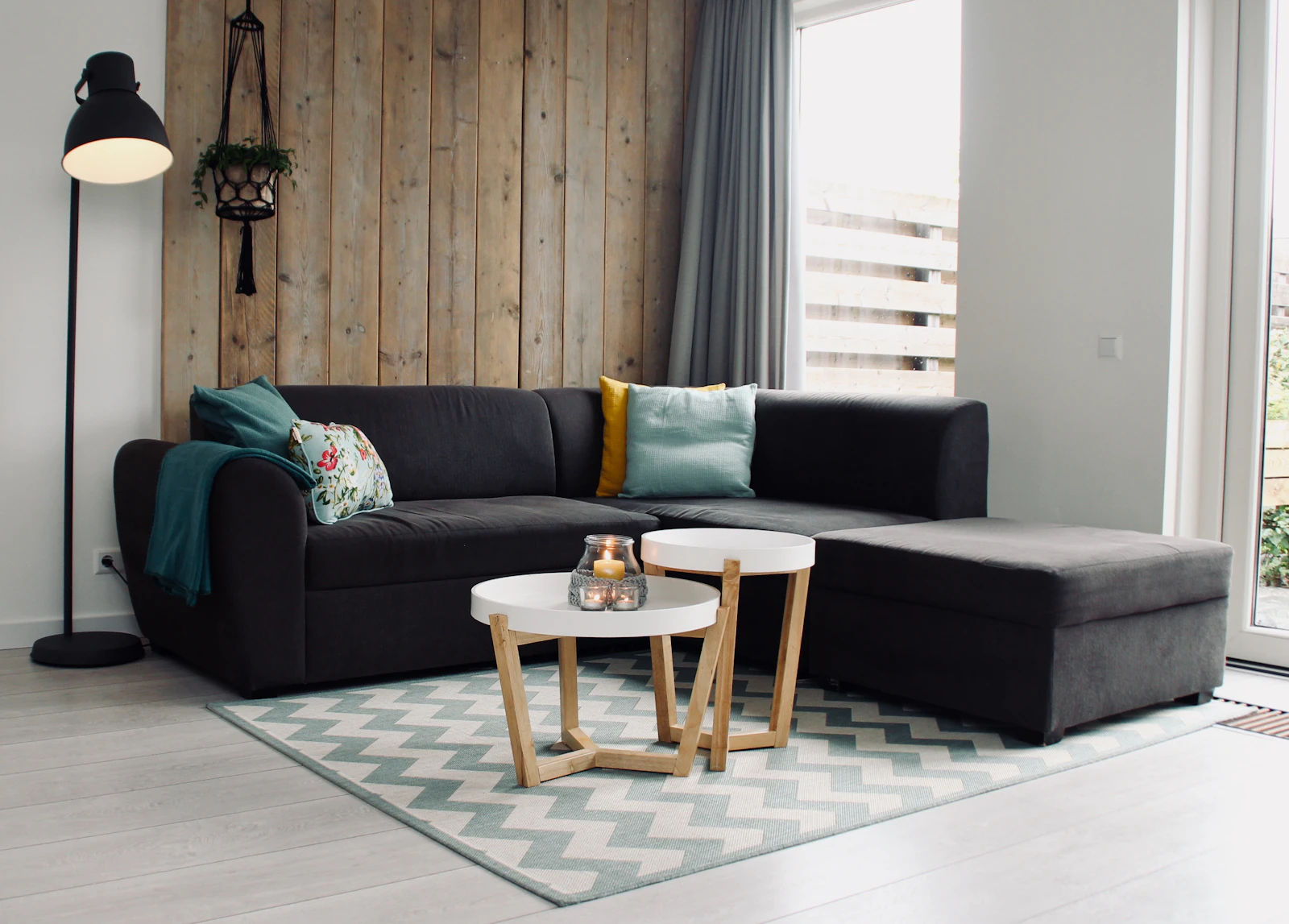
Most advice about small living rooms leads with paint colors and mirrors, as if the room's real problem is optical. It usually isn't. The rooms that feel genuinely bigger almost always fixed something structural first — furniture that's the wrong scale, a layout that blocks the main walking path, or seating pushed so far against the walls that the middle of the room reads as dead space.
Buy Furniture Scaled to the Room, Not the Showroom
A deep, oversized sofa looks proportional in a furniture showroom with twenty-foot ceilings. In a 12x14 room, the same sofa eats the whole floor plan. Before buying anything, measure the room and tape out the footprint of a piece on the floor — it sounds tedious, but it catches oversized purchases before they become permanent problems. As a rough guide, a sofa depth of 32 to 36 inches works better in small rooms than the 38-to-42-inch depth common in larger pieces.
Leave a Real Walking Path
A small room feels cramped fastest when furniture blocks the natural route through it — from the doorway to the seating, from the seating to the window, or wherever people actually walk. Even 24 to 30 inches of clear path changes how a room reads, more than shrinking the furniture further would.
Float furniture instead of lining the walls
It seems counterintuitive, but pulling a sofa a few inches off the wall and adding a slim console or a plant behind it often makes a room feel larger, not smaller — a room with everything pushed to the perimeter can look like it's avoiding its own center.
Choose a Coffee Table That Doesn't Compete
A round or oval coffee table works harder in a small room than a large rectangular one — it has no sharp corners to navigate around, and it visually takes up less space even at a similar footprint. A table with an open base (thin legs, glass top, or a woven design) also reads lighter than a solid block.
Let Storage Do Double Duty
In a bigger room, a media console and a separate storage bench can coexist. In a small one, look for single pieces that solve two problems — an ottoman with storage inside, a console with closed cabinets instead of open shelving that collects visual clutter, a slim bookshelf that also divides the room from an entryway.
Common Mistakes in Small Living Rooms
- Buying a sectional that technically fits but leaves no walking space around it.
- Hanging art or shelves too high in an attempt to 'draw the eye up' — it usually just leaves an awkward gap of bare wall.
- Using heavy, dark curtains that block window light, which is one of the few things that genuinely opens up a small room.
- Adding too many small accent pieces — in a small room, a few slightly larger, well-chosen items usually read calmer than many tiny ones.
Frequently Asked Questions
Does a light paint color actually make a small living room look bigger?
It helps at the margins, mostly by reflecting more light around the room, but it won't offset furniture that's the wrong scale or a blocked walking path. Layout and furniture proportion do more of the real work.
Should I avoid rugs in a small living room?
No — a rug that's too small is the problem, not rugs generally. Size it so all the front legs of your seating (or all four legs, if space allows) sit on the rug; a rug that only the coffee table touches tends to make the room look choppier, not bigger.
More Ideas You May Like
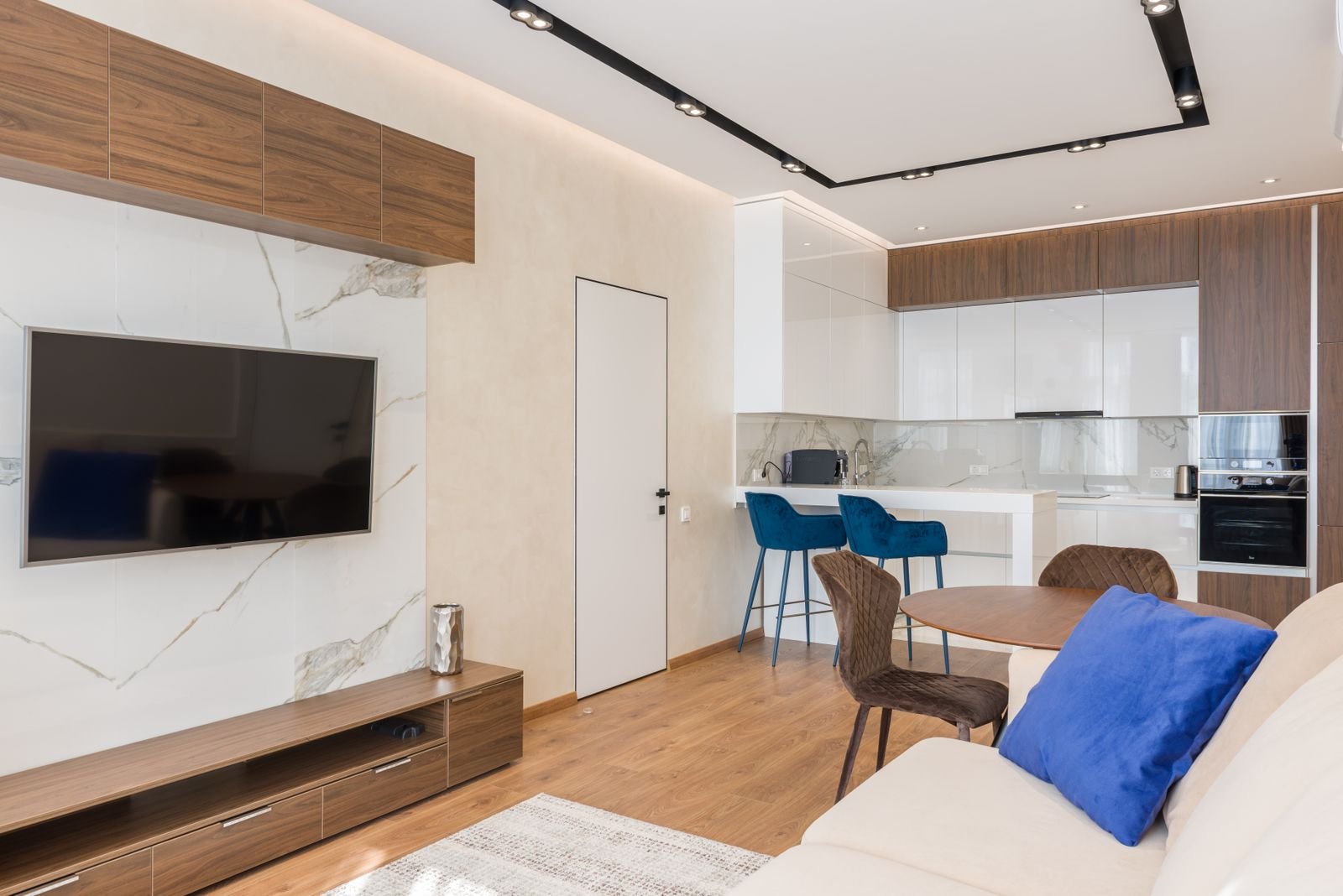
Living Room Layout Ideas for Awkward Rooms
Layout fixes for the living rooms that don't follow the rules — long and narrow, multiple doorways, or no clear focal wall to build around.
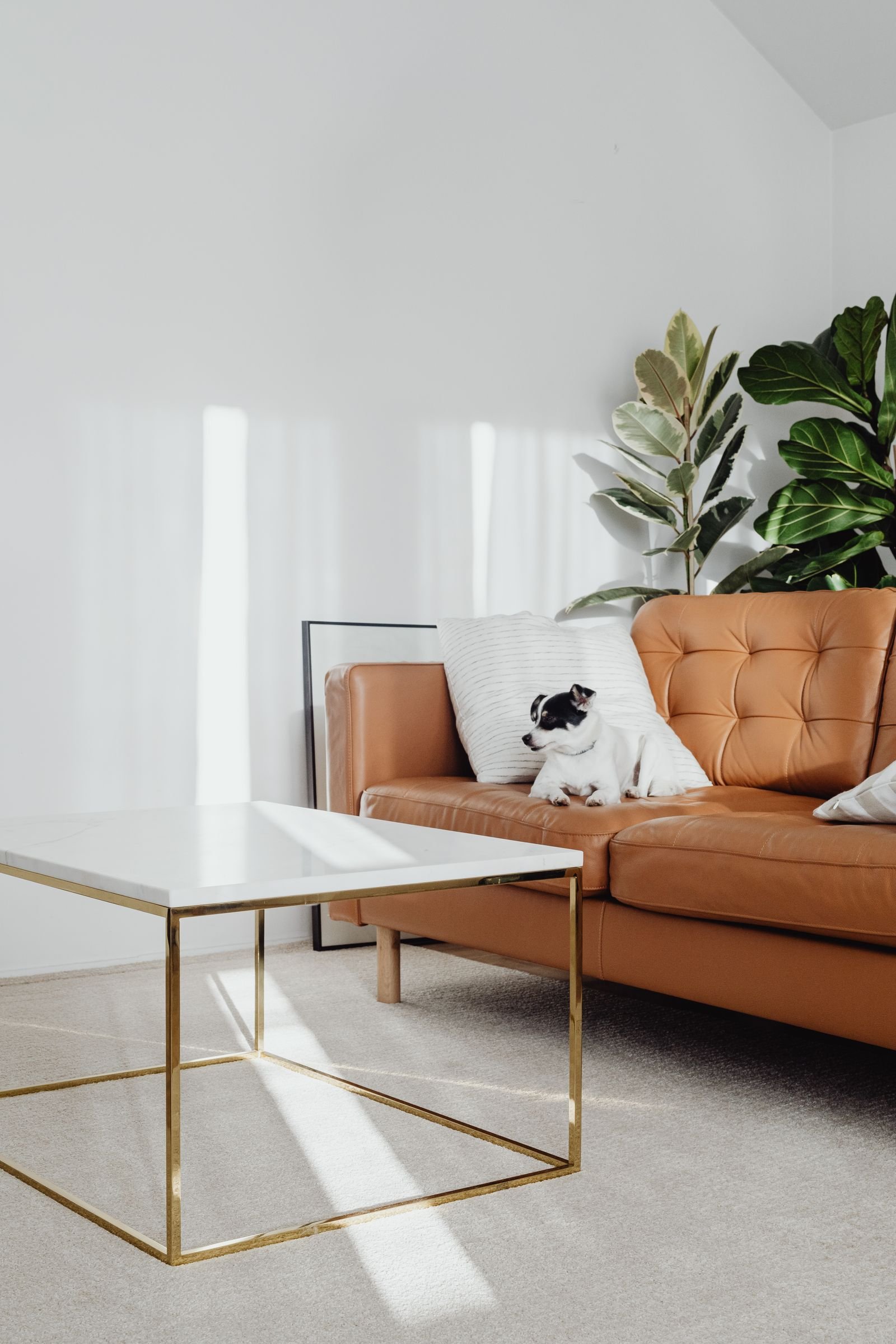
Dog-Friendly Living Room Ideas That Still Look Elegant
A living room can be dog-friendly and still look considered — it comes down to material choices more than giving anything up.
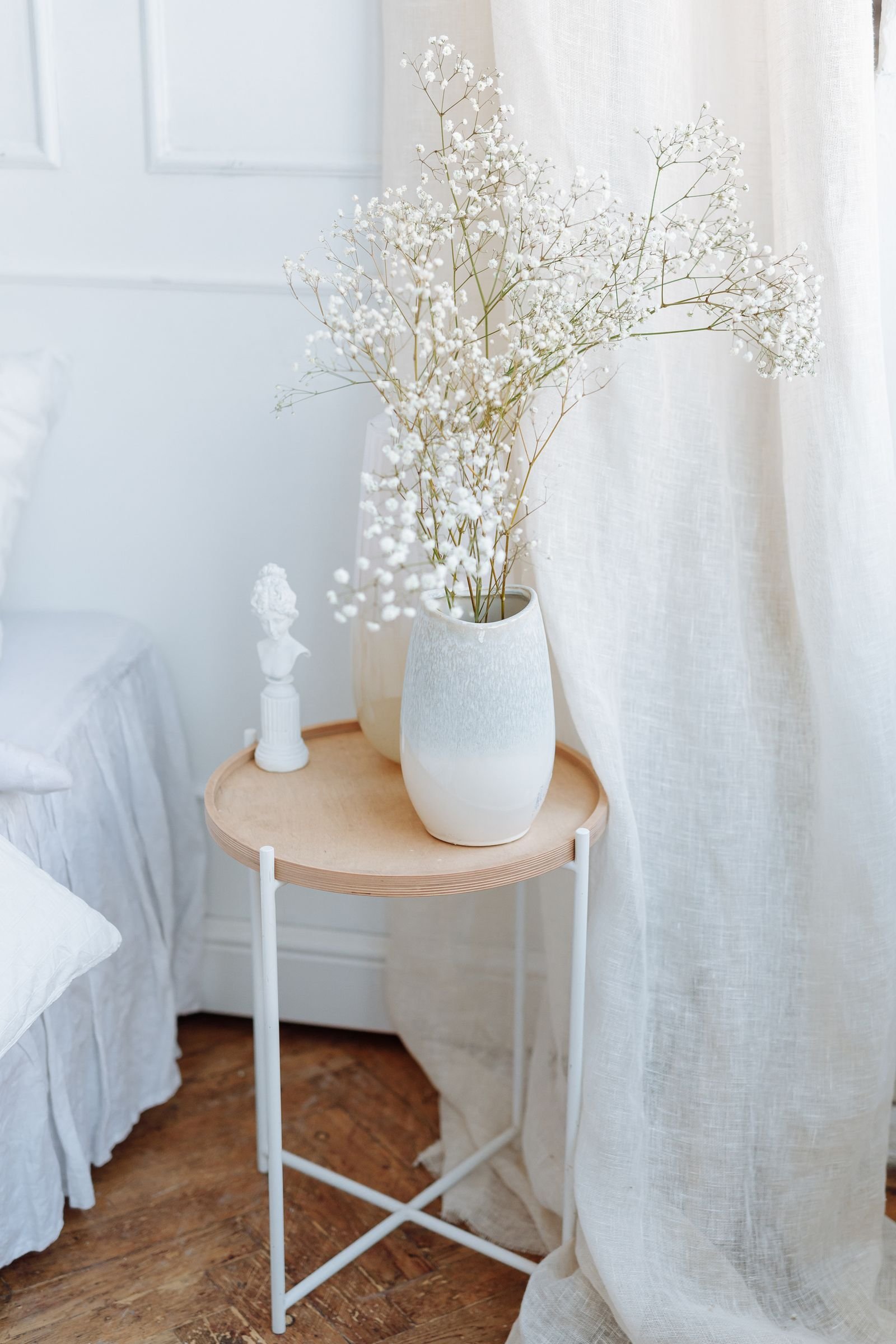
Coffee Table Styling Ideas
A well-styled coffee table usually has three to five objects at varied heights, an empty corner, and still enough space for an actual drink.
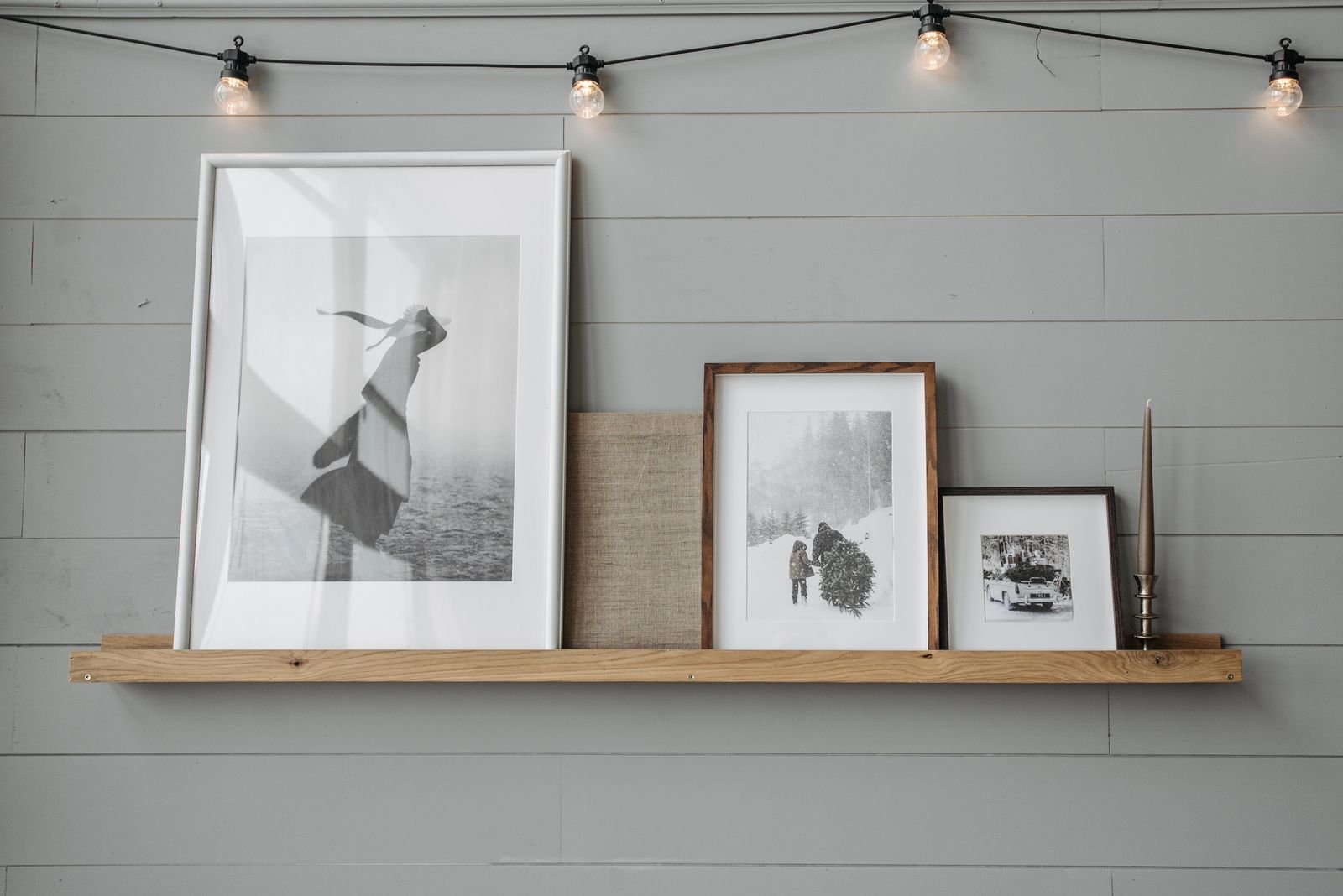
Affordable Wall Decor Ideas
One large print, a hung textile or a cluster of thrifted plates often does more for a wall, and costs less, than several small framed pieces.